
My Research Interests
Areas of Specialization
Cultural Sociology
Sociological Theory
Sociology of the Arts

Music Competitions
I have published widely on the subject of competitions in western classical music. My first book, Performing Civility (Cambridge University Press 2015), argued that competitions are about more than music; they are also about civility.
Early findings from my competition research were published in 2009 in an award-winning article that appeared in Cultural Sociology. In 2014, I contributed an article for a special issue on arts and global citizenship published by Ethnic and Racial Studies that analysed how racial difference is discursively constructed at music competitions. At the invitation of the Chopin Review (2018), I published an article about a legendary scandal in the history of music competitions: Ivo Pogorelić’s elimination from the 1980 Chopin Competition in Warsaw. I returned to the topic of competitions again when David Stark invited me to contribute to his edited collection The Performance Complex (Oxford University Press 2020). There I considered how the arguments in Performing Civility could be extended by considering the political, education, media and vocational contexts surrounding music competitions.
I am currently co-editing the Oxford Handbook of Competition in Music with Prof Tobias Werron (University of Bielefeld) and Dr Christoph Müller-Oberhäuser (University of the Arts, Berlin). This volume will explore music competition(s) across genres and traditions through the following research questions: What role does competition play in music? Is competition in music as important as it is in other social spheres, such as sports, economics, and politics? How do musicians, audiences, managers, critics and other actors organize, stage, perform, experience, observe, evaluate, celebrate and criticize competition(s)? What might be gained by studying competitive practices in music from an historical and comparative perspective?
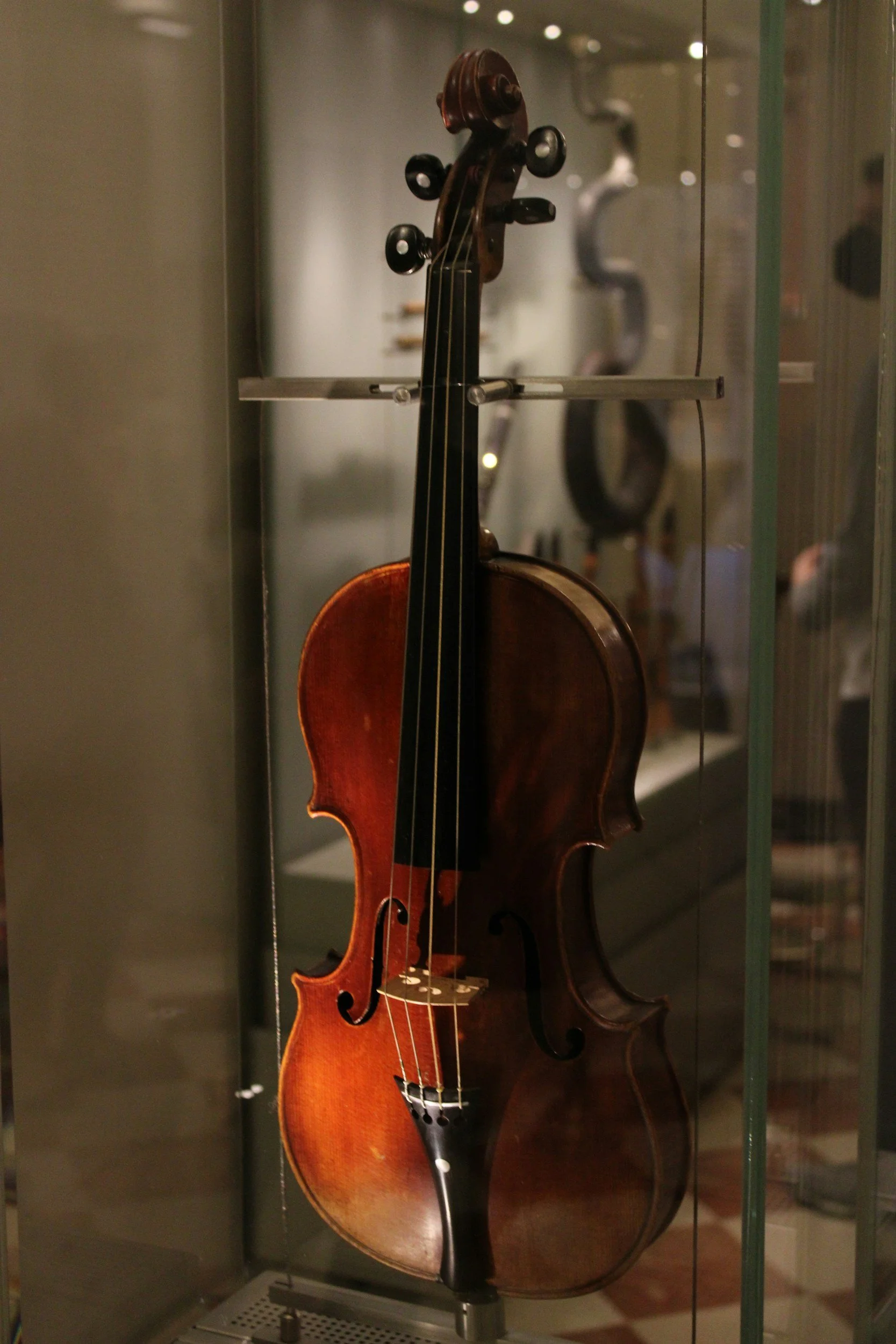
Musical instruments as iconic objects
How do some objects maintain iconic power over centuries? To answer this question, I consider an extreme case from western classical music: the violins and cellos made by Antonio Stradivari (b ? Cremona, 1644–49; d Cremona, 1737), which are popularly known as “Strads”. Compositional styles and musical practices have changed dramatically since Stradivari’s time, but the instruments he made are still widely believed to produce the ideal sound. They maintain an unquestionable status as peerless creations and are priced accordingly, holding the record for the highest purchase price ever for a stringed instrument. Several attempts have been made to determine whether the superiority of the Strad sound is real or imagined, including double-blind experiments that found that audiences and players have difficulty distinguishing Strads from modern instruments. Yet the reverence for Strads remains. They are coveted by international soloists and treasured by private collectors; they are also famous beyond the music world through literature and sensational press reports about their theft, recovery, and narrow escapes from destruction. Using the perspective of cultural sociology, I trace how Stradivari came to be regarded as the greatest instrument maker of all time, and I examine how the social meaning of Strads has been enriched and expanded. By revealing the social processes involved in making and keeping Strads iconic, I offer new insights about the materiality of music and the relationship between artistic value, market value, and heritage value.

Cultural Sociology of the Arts
My work on competitions was informed by the “performance perspective”, a new approach I developed for the sociological study of music that builds on social performance theory. An early outline of the framework was published in Myth, Meaning and Performance: Toward A New Cultural Sociology of the Arts, a collection of essays I co-edited with Ron Eyerman (Paradigm Press 2006, Routledge 2016). This “performance perspective” was further developed in my contributions to The Oxford Handbook of Cultural Sociology (2012) and the Routledge Reader in the Sociology of Music (2015). I have also contributed to the cultural sociology of art and music by guest editing a special issue for the American Journal of Cultural Sociology, which was later expanded into an edited volume published by Palgrave Macmillan (2022). The essays in this collection display the benefits and rewards of taking a cultural approach to the sociology of the arts, which will counteract the stagnation resulting from a stubborn over-dependence on the conceptual frameworks of Becker, Bourdieu and Peterson.

The Sociology of Death
I conducted extensive fieldwork at a crematorium in England for a project on funeral rituals in contemporary British society. In an article published in Contemporary Social Science (2015), I used the concept of the agency of the dead to examine the cult of the dead composer in classical music and the commemorative rites through which they are venerated. For a special issue on the coronavirus pandemic, I contributed an article to the American Journal of Cultural Sociology (2020) that drew from the cultural sociology of disaster to analyze processes of heroization and ritualization during a global emergency.